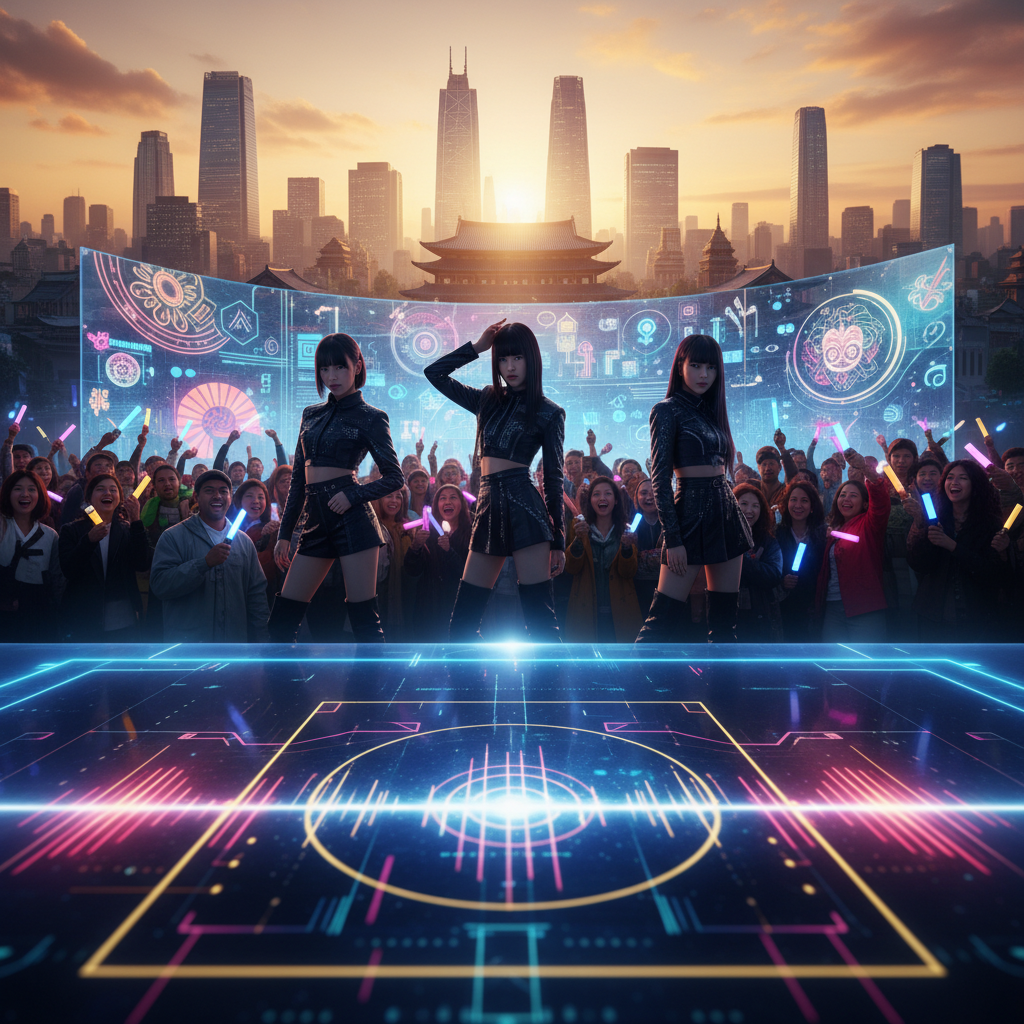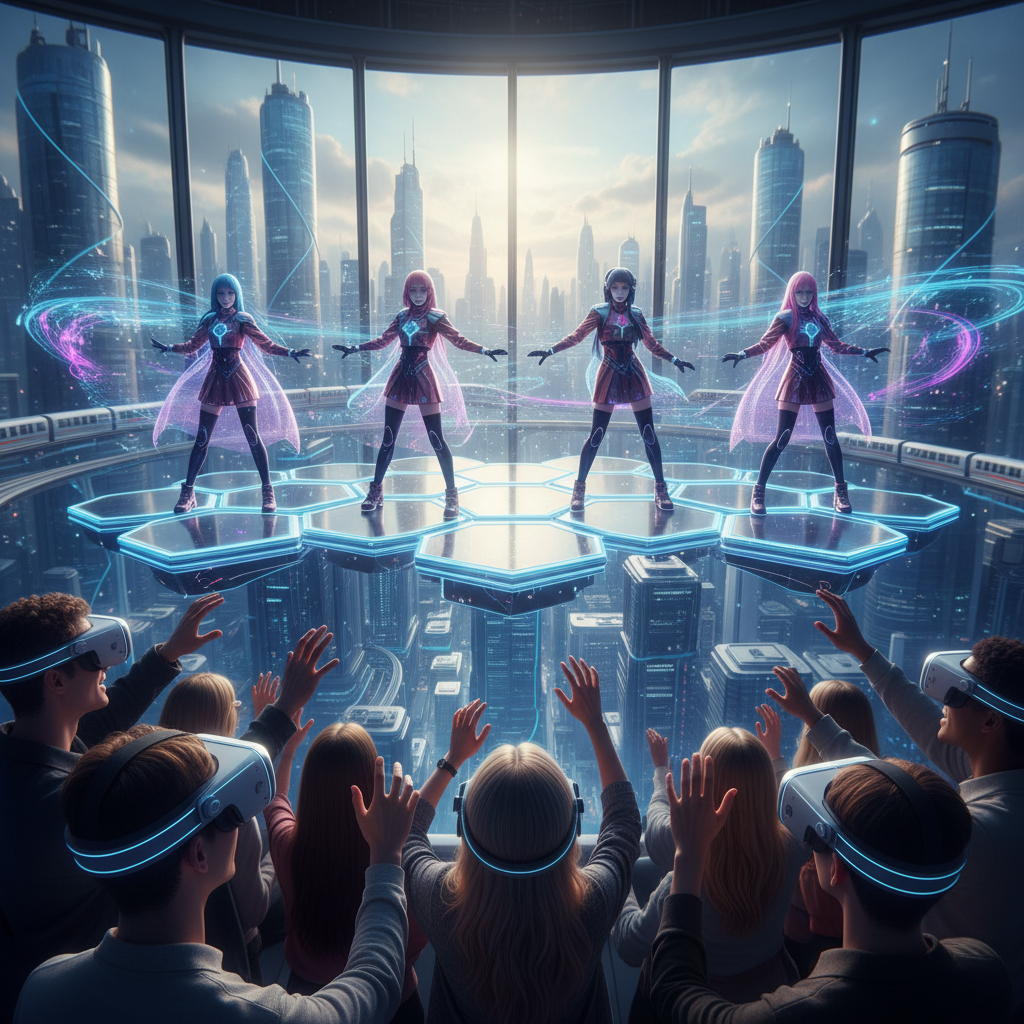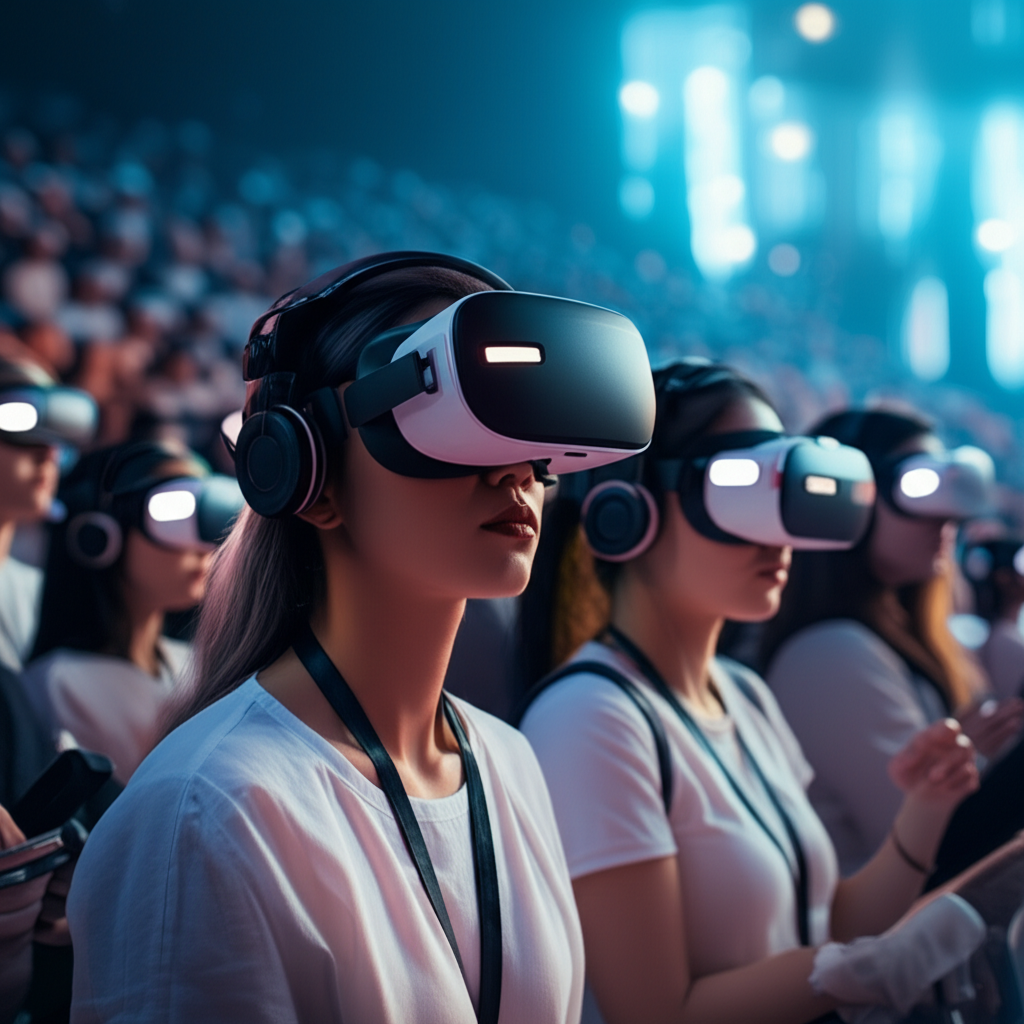
K-pop has always been quick to adopt new technology, and by 2026, virtual reality is becoming a genuine option for live performances. Artists and agencies are exploring how VR can create experiences that feel almost like being at an actual concert, even when fans are thousands of miles away. This shift is opening up new ways for global audiences to connect with their favorite acts.
The Evolution of K-Pop Live Performances
K-pop has built its reputation on spectacular stage shows, intricate choreography, and visual storytelling that keeps audiences hooked. The industry moved from televised music shows to massive stadium tours over the decades, always chasing bigger and better audience experiences. When the pandemic hit, companies had to find ways to reach fans remotely, and that urgency pushed many to experiment with digital concerts for the first time.
By 2026, VR hardware has come down in price enough that more fans can realistically use it at home. The technology itself has improved, making virtual environments feel more convincing. What started as a pandemic workaround has become something artists want to keep even as live shows returned. Fans can now step into virtual venues, choose where they want to stand, and get closer to the action than most physical concerts would ever allow.
How VR is Being Adopted in the K-Pop Industry
South Korea's major entertainment companies are putting real money into VR development. SM Entertainment and YG Entertainment have both announced partnerships with tech firms to build platforms specifically designed for K-pop events. These aren't just streaming services with a VR label—they're purpose-built environments where fans can move around, explore different viewing angles, and interact with each other virtually.
Several groups have already tested the waters. SEVENTEEN and TWICE have both incorporated VR elements into recent tour announcements, generating significant fan interest. What's interesting is how this technology helps fans who could never afford to travel to Korea or attend international concerts. Someone in Kansas or rural Japan can now experience a show that feels substantially more real than watching a YouTube video.
The Benefits of VR for K-Pop Artists and Fans
K-pop's audience has gone truly global, but physical concerts can't be everywhere. VR solves that problem in a way previous livestreams couldn't match. Fans get spatial audio that makes them feel surrounded by sound, and 360-degree views let them pick their own perspective on the performance.
- Better immersion: Virtual venues can place fans right at the edge of the stage, somewhere impossible to get at a real concert without connections or enormous ticket costs.
- Lower costs overall: Artists avoid the massive logistics of international touring—flights, hotels, venue contracts—while fans skip flights and hotel rooms entirely.
- New revenue opportunities: Digital-only merchandise, premium viewing passes, and virtual meet-and-greets give companies ways to make money beyond traditional ticket sales.
- Environmental benefits: Fewer fans traveling means less carbon emissions, something Korean entertainment companies are increasingly conscious of as sustainability becomes a bigger public concern.
Artists can also try things in VR that would be impossible live. A member could transform into a different character mid-show, or the entire venue could shift from a stadium to an underwater world between songs. These aren't just gimmicks—they create content that's genuinely unique to the virtual format.
Challenges and Considerations in Implementing VR
VR isn't accessible to everyone yet. A decent headset still costs several hundred dollars, which puts it out of reach for fans in lower-income situations. That's a real problem when K-pop's audience includes people from all economic backgrounds. Companies are aware of this, and some are experimenting with lower-cost options or rental programs.
The other challenge is recreating that electric feeling of a real crowd. When you're at a K-pop concert, the energy of thousands of fans singing along is half the experience. Virtual environments can simulate this to some degree, but it doesn't fully capture the raw energy of a physical crowd screaming for their bias. Technical glitches like lag or tracking issues can also break the immersion entirely if the underlying infrastructure isn't solid.
South Korea's government has been supportive of VR research through various initiatives, which helps push the technology forward. Companies are also working on data protection policies for virtual interactions, since these platforms collect quite a bit of information about how users behave and engage.
Looking Ahead: The Future of VR in K-Pop
Looking forward, VR seems likely to become a regular part of how K-pop promotions work, even if it doesn't replace physical concerts entirely. The most exciting possibility is hybrid events—shows where some fans are physically there while others join virtually, and both groups can see and interact with each other. That's technically challenging but not impossible.
NCT and ITZY have both hinted at VR-heavy comeback plans for the near future, and given how quickly K-pop agencies copy successful ideas from each other, we could see this spread quickly across the industry. What's happening in Korean pop music right now might well influence how other genres approach virtual concerts in the years ahead.
2026 Update
Just in the first months of 2026, several K-pop agencies have announced dedicated VR apps, and at least two major music shows are now broadcasting select performances in stereoscopic 3D for compatible headsets. The technology is still niche, but the infrastructure is building faster than many analysts expected.
Virtual reality is becoming a genuine part of how K-pop reaches its fans, creating experiences that physical concerts alone never could. As the technology improves and becomes more affordable, it'll be fascinating to see how artists push the creative possibilities even further.